To be announced
Tai Chi
Meditation in motion. Tai chi combines slow, flowing movements, deep breathing and meditative focus to promote physical health and mental wellbeing.
What is tai chi?
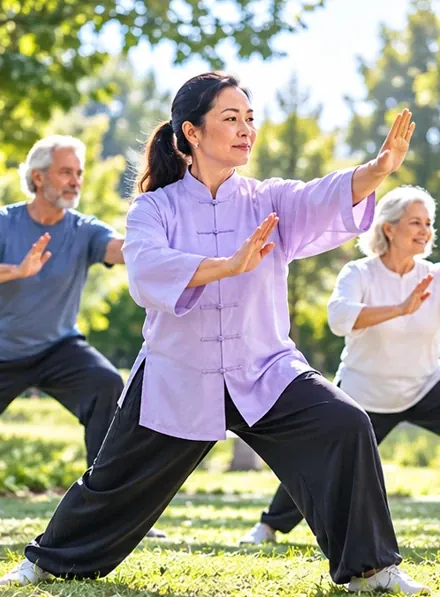
Tai chi is a Chinese martial art that combines slow, flowing movements, deep breathing and meditative focus to promote physical health, mental wellbeing and self-defence skills. It is a versatile practice that blends martial arts, gentle exercise and meditation, offering physical, mental and therapeutic benefits suitable for a wide range of practitioners.
Origins and styles
Tai chi originated in China as a martial art for combat and self-defence, with its earliest well-documented practice during the Ming–Qing transition in Henan province. It has evolved into a form of exercise, relaxation and sport. Most modern styles trace back to five traditional schools: Chen, Yang, Wu (Hao), Wu and Sun. While originally martial, today many practitioners focus on health and wellness rather than competition or fighting techniques.
Practice and techniques
Tai chi is performed in forms (taolu)—sequences of movements that coordinate the hands, feet, body, mind and breath. Movements are typically slow and gentle, earning the description “meditation in motion,” but can also be practised at faster paces once mastery is achieved. Some forms include weapons such as the jian (straight sword), dao (curved sword) and qiang (spear). The practice emphasizes posture, balance and internal awareness, making it accessible to people of all ages and fitness levels.
Health and wellness benefits
Research shows tai chi improves balance, flexibility, mobility and mental clarity, and can reduce stress, blood pressure and chronic pain. It is particularly effective in fall prevention for older adults and is recommended for conditions like osteoarthritis and Parkinson’s disease. Tai chi also supports cardiovascular health and cognitive function, offering a low-impact alternative to more strenuous exercise.
Mind and philosophy
Beyond the physical benefits, tai chi teaches mindfulness, awareness and staying present, helping practitioners manage stress and improve mental focus. Its meditative quality offers benefits similar to seated meditation, including relaxation and emotional regulation. The practice encourages a holistic approach to movement and life, integrating body, mind and breath.